
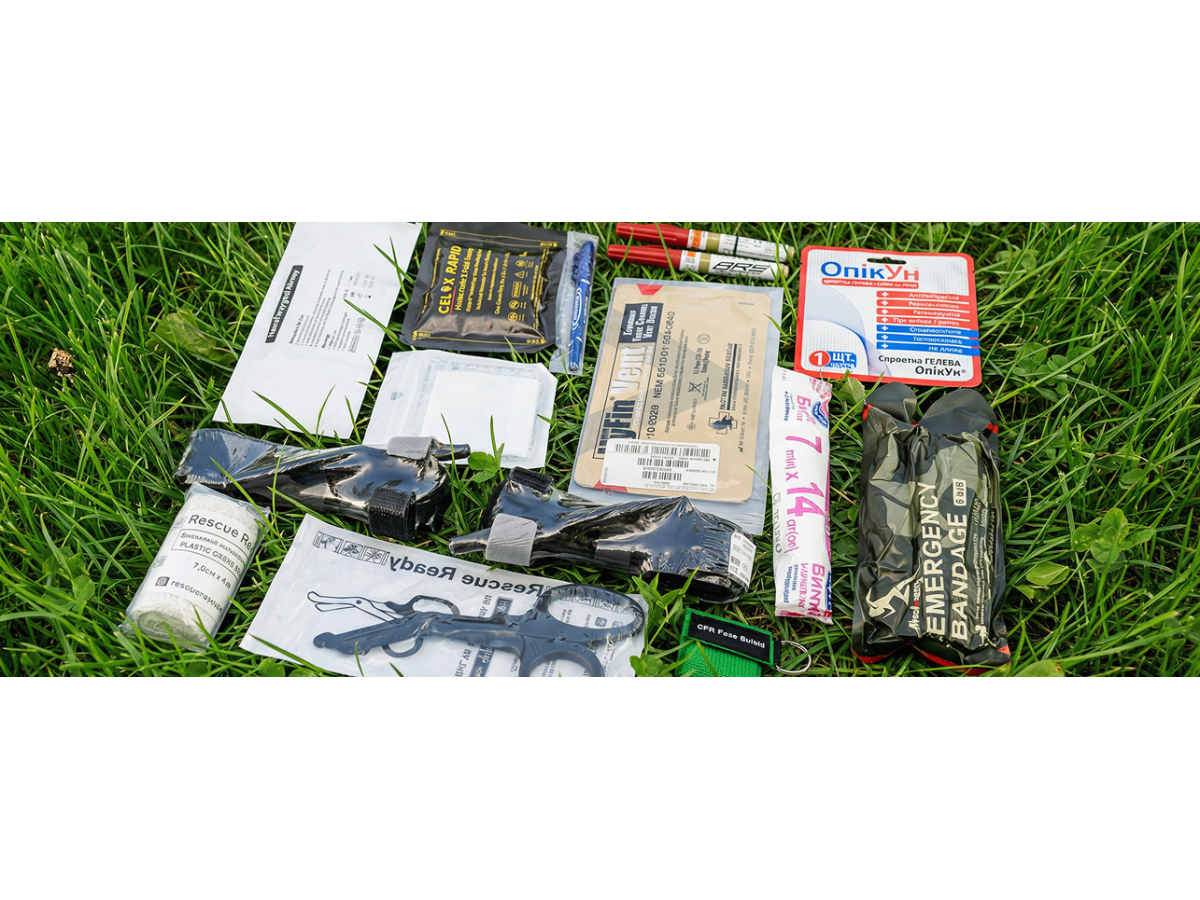
A tactical first aid kit is one of the most vital elements of military equipment, directly impacting survival in combat conditions. According to modern military standards, most injuries can be stabilized before evacuation begins—but only if you have a properly equipped set of medical supplies and basic first aid skills. In this article, we will look at the basic composition of a soldier's first aid kit, the standards applied to it, and how its various types differ.
What is a Military First Aid Kit and Why is it Needed?
A military first aid kit is individual medical military equipment, a set of medical tools for providing first aid in harsh conditions or during combat operations.
Its primary purposes are:
- Rapidly stopping bleeding;
- Ensuring airway patency;
- Protecting against complications;
- Stabilizing the wounded person's condition for evacuation.
Modern first aid kits are developed and assembled in accordance with Tactical Combat Casualty Care (TCCC) guidelines. Their main goal is to eliminate the causes that most frequently lead to fatalities on the battlefield.
Military Standards and the AFU First Aid Kit Composition
In the Armed Forces of Ukraine (AFU), tactical first aid kits are assembled according to international NATO standards and other principles that determine their effectiveness, efficiency, and importance on the battlefield.
The basic composition of a military first aid kit is based on the following principles:
- Orientation toward the MARCH algorithm;
- Use of certified products only;
- Unification of the kit for convenience;
- Selection of only vital, life-saving medications.
A typical Armed Forces of Ukraine first aid kit includes tools designed to stop massive hemorrhaging (tourniquets and others), seal wounds (especially in the chest area), ensure stable breathing, and prevent hypothermia.
It should be noted that the kit's composition may vary depending on the unit, its specific tasks, and mission conditions.
Types of Kits: Individual, Tactical, and Combat
A soldier's first aid kit is divided into several main types, differing in their purpose and completeness of equipment.
The kits may include the following varieties:
- Individual First Aid Kit: Designed for self-aid or buddy-aid, containing a minimal but critically important set of components.
- Tactical First Aid Kit: An expanded kit used by medics or specially trained soldiers, containing more comprehensive means of providing aid.
- Combat First Aid Kit: A military kit intended for an entire unit, containing a necessary set of medications and instruments.
The key differences between various types of individual aid kits lie in the volume and quantity of medications, the user's level of training, and overall functionality.
Military First Aid Kit Composition: Full List
The composition of an army first aid kit is based on the specifics of its use. A full assortment includes means for stopping bleeding, improving breathing, dressing materials, medications for hypothermia prevention, and additional tools.
.png)
Tourniquet
An element of the kit designed to stop or reduce bleeding, the tourniquet is a key component of every soldier's gear. According to modern standards, there should be at least two—one inside the kit and another outside, placed to be easily accessible to the soldier.
The kit must contain a high-quality tourniquet from a proven brand. We do not recommend buying Chinese models or Ukrainian versions from unreliable manufacturers, as they may fail under pressure.
Hemostatic Gauze
A soldier's individual first aid kit would be incomplete without hemostatic agents. These are used to quickly stop bleeding in areas where a tourniquet cannot be applied. Hemostatics can come in powder, gauze, or plunger forms. Gauze is considered the most convenient, as it does not lose its properties due to external factors and is suitable for use in difficult conditions.
Compression Bandage
A military kit must include a compression bandage (e.g., Israeli bandage). It is used to tightly wrap a wound and stop bleeding. It is most often applied when a wound has not caused massive hemorrhage and a tourniquet is not necessary. Bandages come in different sizes, most commonly four and six inches. It is best to stick to proven manufacturers like CAT and SAM.
Nasopharyngeal Airway (NPA)
A quality military kit should contain tools for airway management. Severe injuries can lead to breathing difficulties or tongue obstruction. A nasopharyngeal tube is used to restore lung ventilation.
Occlusive Dressing (Chest Seal)
The first aid pouch usually contains tools to treat pneumothorax. If a soldier's chest cavity loses its airtightness, breathing can become difficult or impossible. In such cases, emergency aid must be provided by restoring the seal using an occlusive dressing on the chest.
Bandages, Wipes, and Plasters
Pre-equipped military kits must contain dressing materials and other small items. These help maintain cleanliness around the wound, manage minor bleeding, and ensure wound sterility.
Thermal Blanket
The kit should also include means for thermoregulation. Remember that stopping the bleeding is not the only step in stabilizing a casualty. It is vital to ensure hypothermia is avoided. Heat retention can be provided by rescue blankets that reflect the body's radiated heat.
Scissors
Special tactical shears are also part of a military kit. They have a specific shape compared to regular scissors and are designed with reinforced parts. They are used to cut through clothing to access and treat wounds.
Medical Gloves
It is important for the kit to include sterile disposable gloves to prevent blood contamination when treating wounds directly on the battlefield.
Marker
The kit contains more than just stabilization tools. For example, a permanent marker is used to record the time a tourniquet was applied. It should be able to write on both the tourniquet itself and the patient's skin.
Individual First Aid Kit – Composition (IFAK)
The Individual First Aid Kit (IFAK) is the minimal set of necessary supplies and medications that a soldier must always have at hand.
Typical contents of an IFAK:
- Tourniquets (2 pcs);
- Hemostatic gauze;
- Compression bandage;
- Occlusive dressings/Chest seals (2 pcs);
- Gloves;
- Nasopharyngeal airway;
- Thermal insulation blanket;
- Tactical shears;
- Marker.
The key purpose of an IFAK is to enable rapid self-aid or buddy-aid in the first minutes after an injury. With this kit, a wounded soldier's condition can be stabilized until evacuation, improving their chances of survival and full recovery.
How to Improve a Military Kit: Additional Tips
Every soldier's basic kit can be adapted to the specific individual, the combat tasks performed, and the specific unit's requirements.
A combat kit's composition can be supplemented with:
- An additional tourniquet;
- Spare gloves;
- Antiseptic;
- Painkillers (as prescribed by a doctor);
- Flashlight or chemical light sticks;
- Individual medications;
- Disposable syringe;
- Medical tape;
- Decompression needle;
- Saline solution in ampoules, etc.
Both military personnel and civilians can add medications based on individual needs, such as insulin. However, the rest of the kit's standardized composition should remain unchanged to ensure that others can provide help quickly if needed.
How to Check and Properly Pack a First Aid Kit
Checking and properly arranging your kit is crucial for its effectiveness and the safety of the medical supplies used.
A first aid kit should always have:
- Supplies with valid expiration dates;
- Intact packaging;
- All required components present;
- Properly placed elements for quick access.
When assembling a kit, pay attention to specific recommendations. Gloves should be powder-free and correctly sized for the soldier's hands. For wound treatment, it is better to choose antiseptics containing chlorhexidine, octenidine, or similar components.
Internal organization is a key factor affecting usability. It is vital that medications and supplies are arranged so they can be reached quickly. Assign separate compartments for dressings, hemostatics, and tools to speed up the search process.
Where and How to Wear a Military First Aid Kit
Proper placement of the kit is critical in modern field conditions. Follow these basic principles for better accessibility:
- Accessible to both hands;
- Located on the front of the gear or on the belt;
- Secured in a quick-release (rip-away) pouch;
- Uniformly placed across all members of a unit.
The most common locations are on the plate carrier, on the belt, or even on the thigh. It must not hinder movement while remaining within the soldier's reach.
A tactical first aid kit is not just a set of medical supplies; it is a life-saving tool. Its effectiveness depends directly on its composition, the quality of its components, and the user's skills. In combat conditions, having a kit and knowing how to use it can be the decisive factor in saving a soldier's life.
.jpg)